
Why I Filmed This Condo for a Buyer Who Was Not There
This is the true life of a realtor. On any given day I am walking properties, evaluating them and giving people my honest advice. On this day I was at Cedar Creek Landing Condos in Jacksonville, and the person I was really filming for was a buyer who lives out of state. They were very interested in the unit, but they were not in Florida, and they were not going to be in Florida before they needed to make some decisions.
So I did what I do for every remote buyer. I started at the gate, walked the grounds, went down to the water, walked through every room inside, opened doors, ran the faucets, checked the air conditioning, and pointed the camera at the things a buyer would want to see if they were standing next to me. Then I talked through what I saw, the good and the not so good.
Buying a home you have not stood in is a big step. I get it. People relocate for work, buy a place for retirement before they retire, or buy near family from a few states away. In all of those cases, a video tour is not a replacement for due diligence. It is the first layer of it. What I want to show you here is how I build that first layer, and what you should insist on after the video ends, so that you are making a decision with your eyes open.
One note before we start. I am not going to share the street address or the unit number in this article, and I am not going to share anything about the owner. You will see the community name, because Cedar Creek Landing is the neighborhood, and the neighborhood is a big part of the story. Everything I say about the property comes from my walkthrough video, its title and its description.
Start With the Community, Not the Unit
When you buy a condo, you are buying two things: the inside of your unit and a share of a community. Out-of-state buyers often focus almost entirely on the unit, because that is what the listing photos show. But the community is what you live in every day, and it is the part you cannot change after closing.
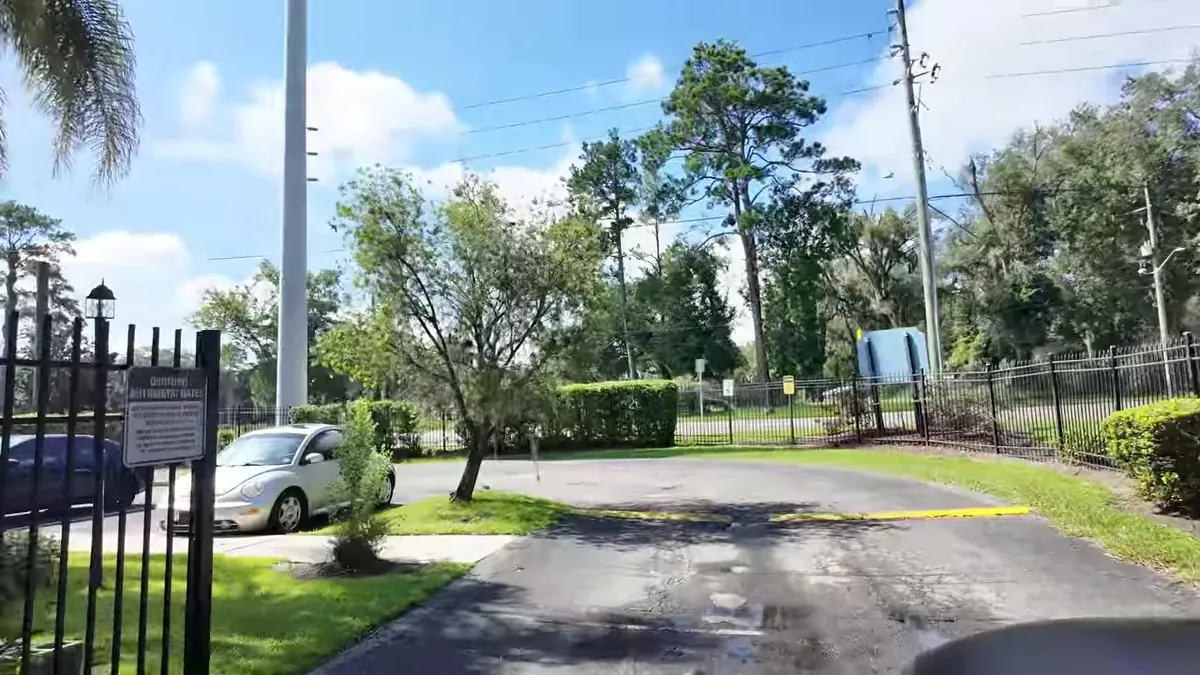
That is why my video starts at the entrance. Cedar Creek Landing is a gated community. You need a code to get in, and once you are inside you have reserved parking. For a lot of buyers, especially people who will not be in the unit full time, those two things alone matter. A gate and an assigned space are not glamorous, but they change how it feels to come home after dark or to leave the place for a few weeks.
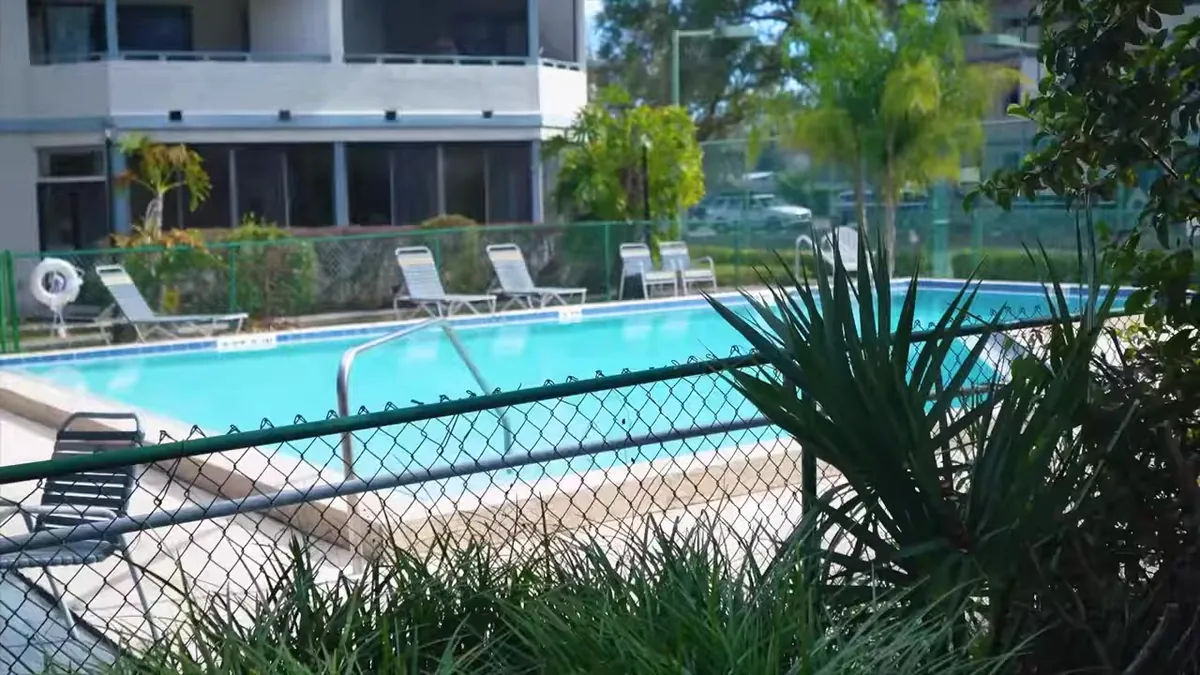
From there I walked the grounds. There is a pool behind one of the buildings. There is a tennis court, and I said in the video it looks like it could probably be used as a pickleball court too. That is something I would have a buyer confirm with the association, because the rules for a court are set by the community, not by me. There is plenty of open space, and in the video I said it plainly: walk your dog if you have a dog.
The grounds are maintained by the homeowners association, so the lawn, the landscaping and the common areas are not your weekend job. That is one of the reasons people choose a condo in the first place. It is also one of the reasons your monthly association dues exist, and we will get to how to think about those later.
What I look at in a community on a remote tour
- Entry and security. Is it gated? Is the gate working? How do guests and deliveries get in?
- Parking. Is parking reserved or first come? Where do guests park? Where do trailers go?
- Amenities. Pool, courts, open space, docks. Do they look used and cared for?
- Grounds. Are the common areas clean and maintained? Grounds tell you a lot about how an association runs.
- The walk from car to door. How far is it, and how many stairs? This unit is up a flight of stairs, which matters if you are carrying groceries or have bad knees.
What Water Access Means at Cedar Creek Landing
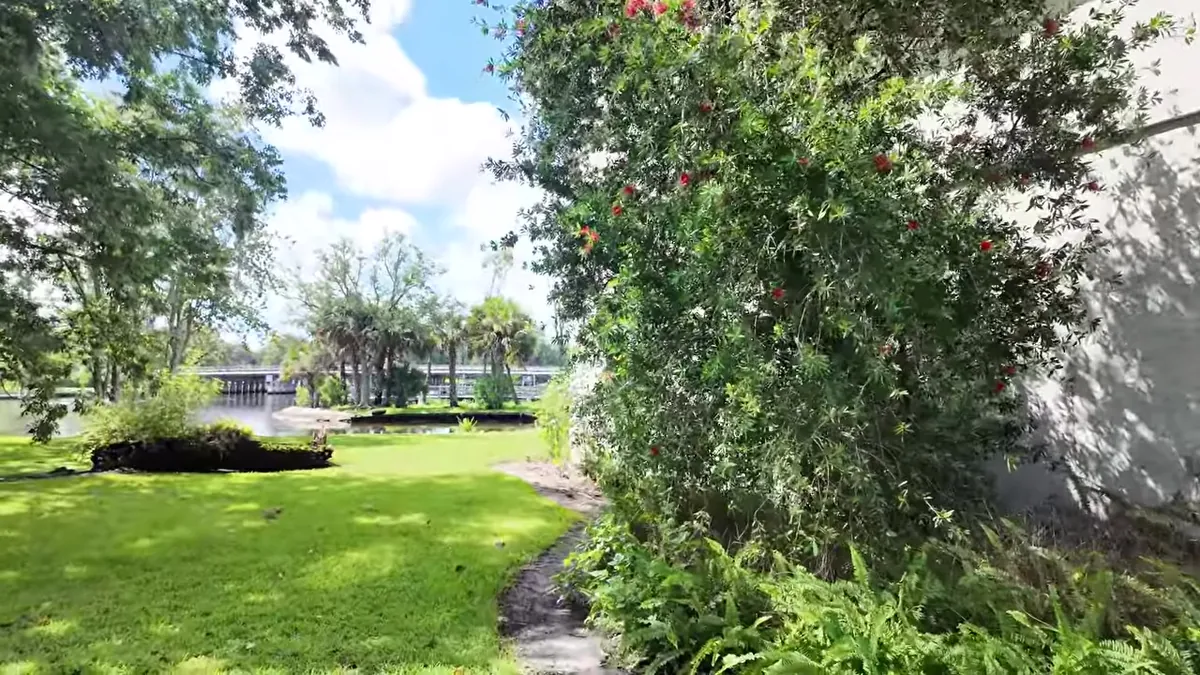
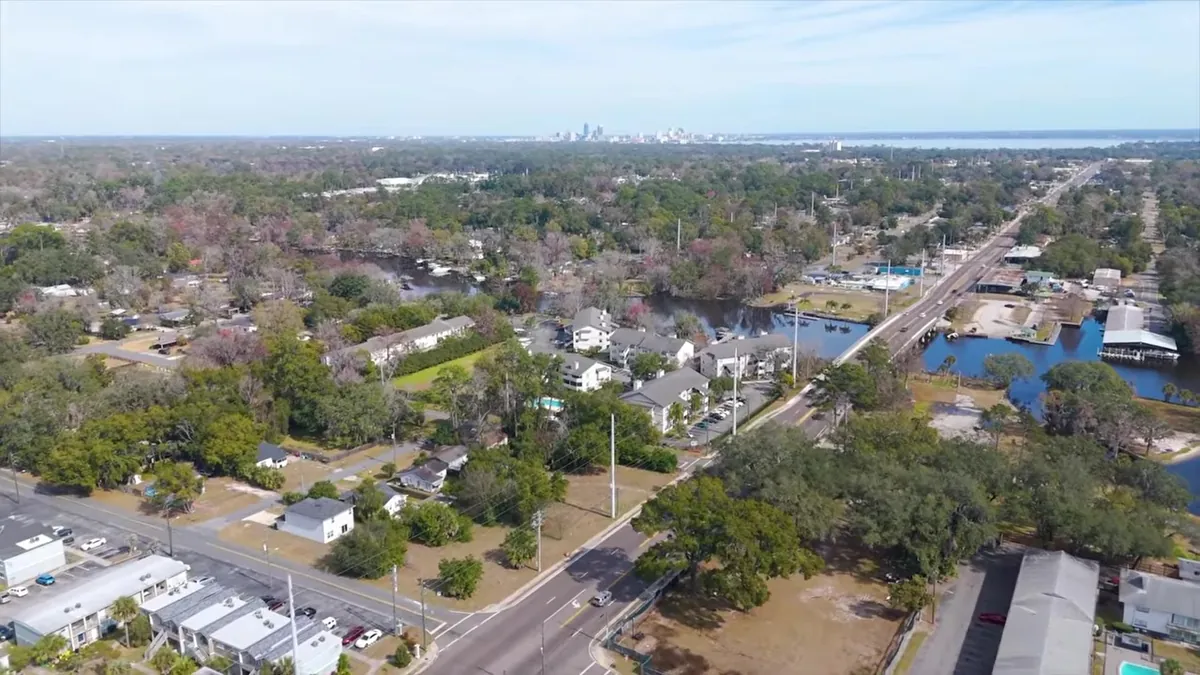
The reason a lot of people look at this community is the water. In the video I called it a waterfront community, and it is built around the water. Cedar Creek runs along the property, and from Cedar Creek you can get out to the St. Johns River. From the river you can head toward downtown Jacksonville or out toward the ocean. If you like boating, kayaking, fishing or crabbing, that is a real lifestyle feature, not a marketing line.
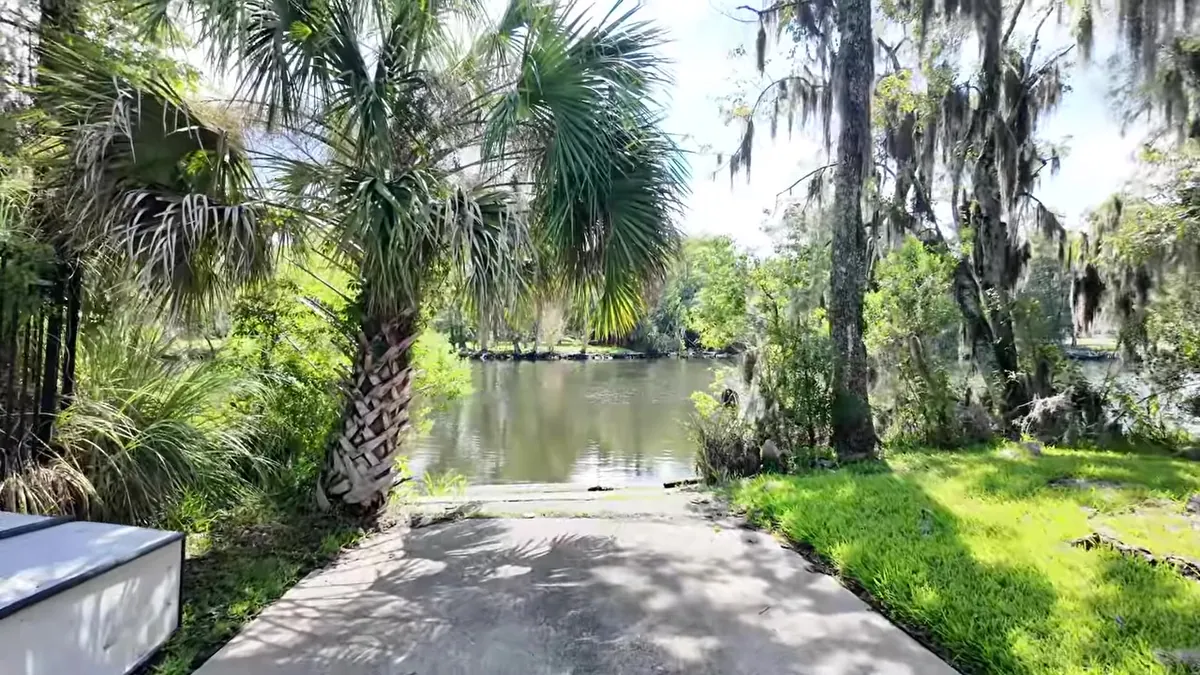
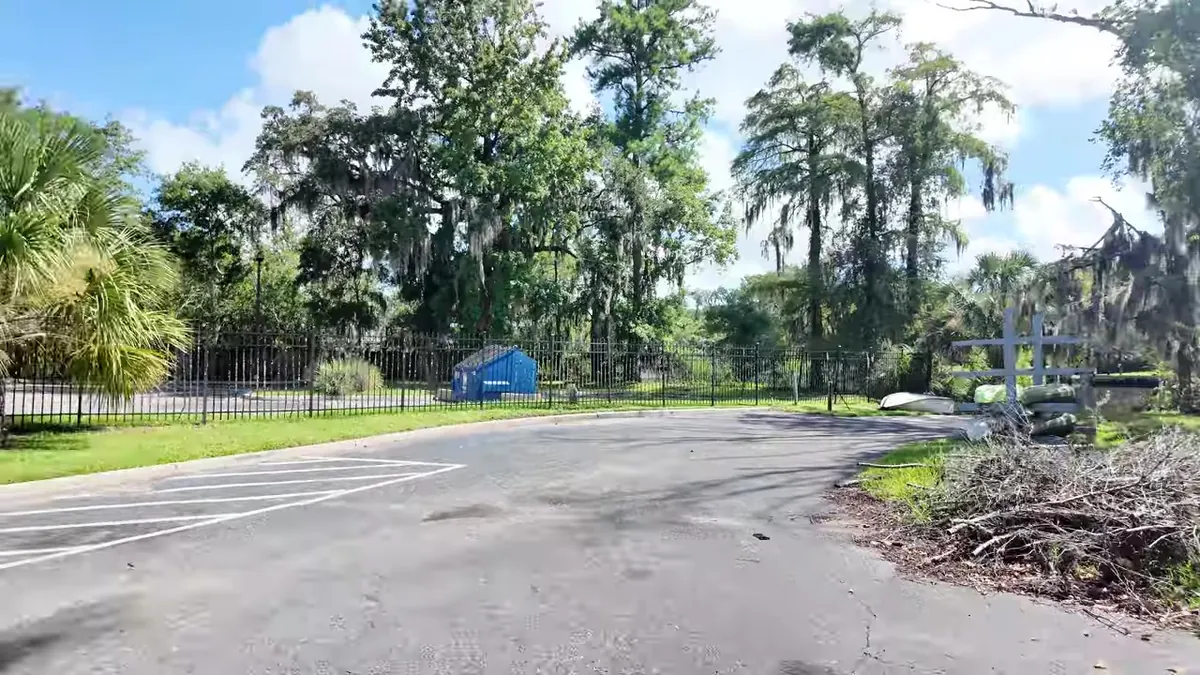
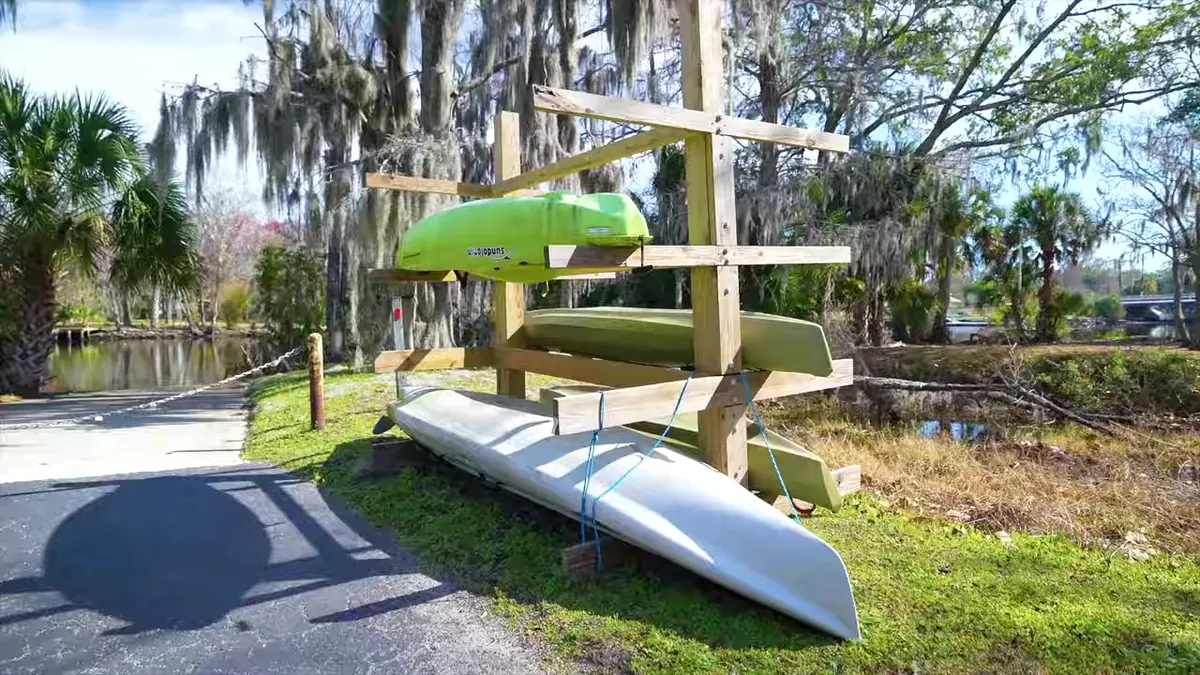
I want to be specific about what kind of boating this is, because out-of-state buyers sometimes picture something different. You are not doing the yachts here. What I saw was a place built for kayaks and for any boat that can be trailered. There is kayak storage. People had their boats and jet skis on trailers parked in the lot. There is a dock. While I was down by the water there were tons of little crabs, the kind you can catch and use as bait, and some small fish in the water.
Boat slips: verify, do not assume
Here is a detail I would never let a remote buyer gloss over. The boat slips in this community are owned. You buy a slip from an owner. In the video I said the owner was going to check on the slip details for this unit, and the video description says plainly that buyers should verify availability, ownership and any boat slip purchase options directly.
If a slip matters to you, treat it as its own line item in your due diligence. Ask who owns the slips, whether one comes with the unit or is sold separately, whether any are for sale and at what price, what the association rules say about boats, trailers and jet skis, and whether any extra fees apply. Get the answers in writing before you are under contract, or at least before your inspection and document review period ends.
Water views and what the camera can and cannot tell you
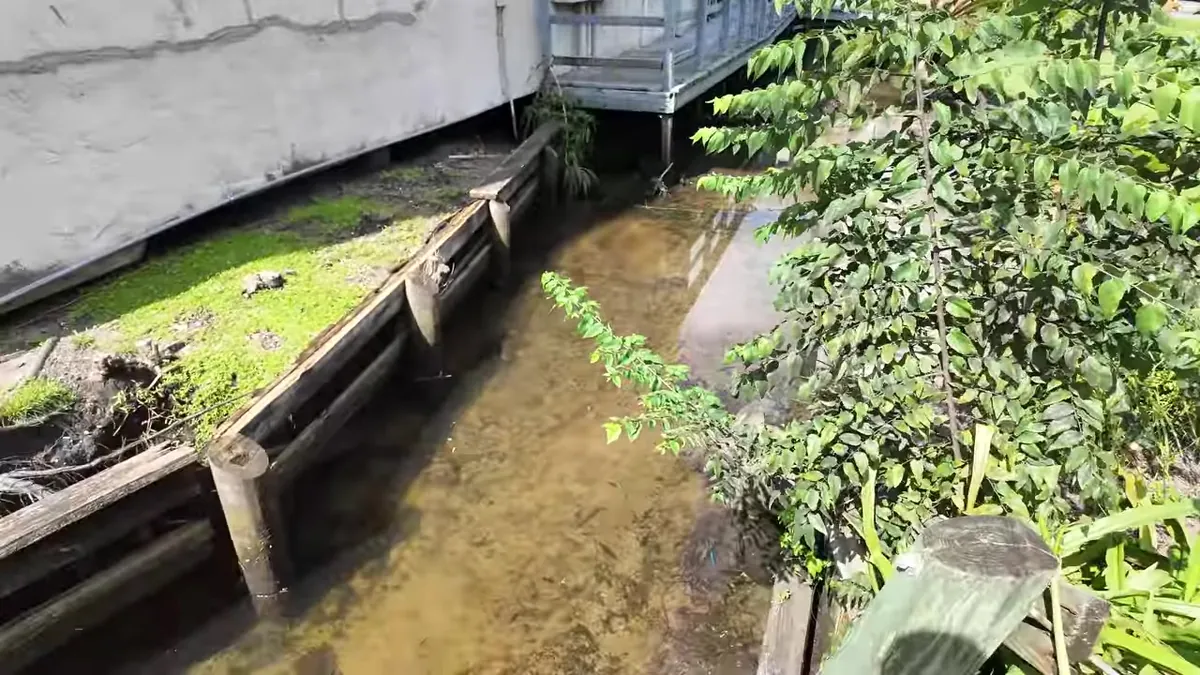
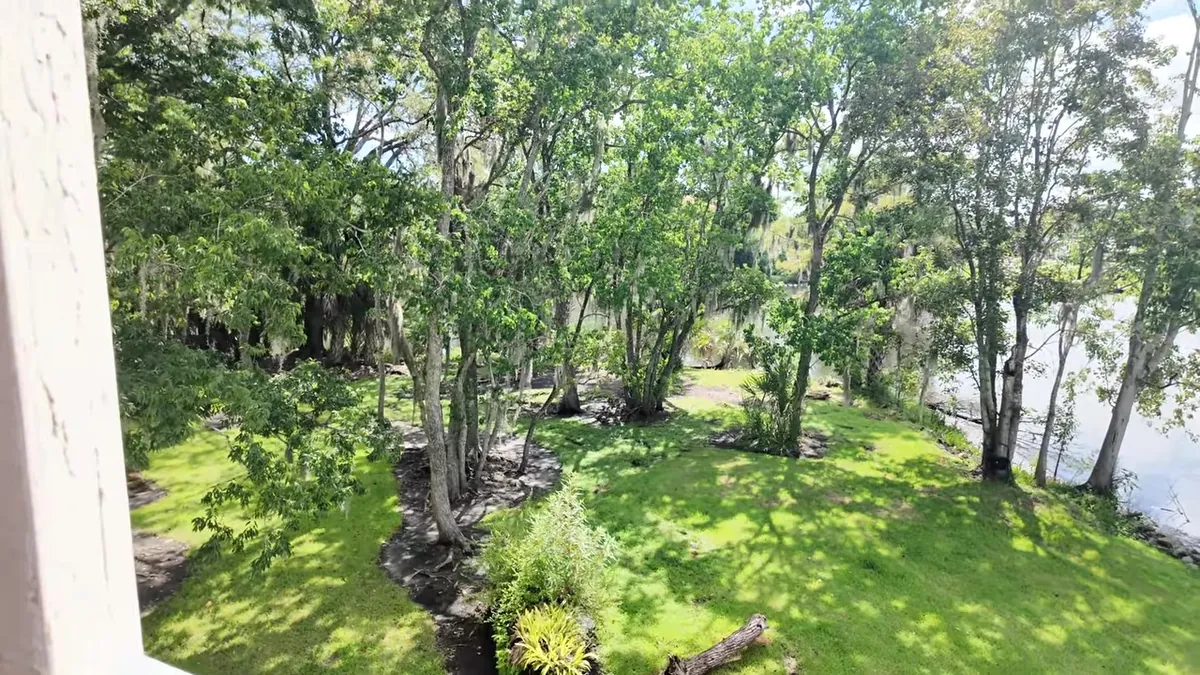
From the unit you get water views, and from the first-floor patio you can see a road and a bridge. On video, a water view looks the same whether it is five feet away or fifty. That is one of the limits of a video tour. I always try to show the view from inside the unit and then walk outside so a buyer can see the distance and the angle. If a view is a major part of why you are buying, ask your agent to film it at different times of day, or ask for a drone shot that shows where the unit sits relative to the water.
Inside the Unit: What I Show on Camera, Room by Room
This is a two-story condo. The unit sits on the second floor of the building, and then it has another story inside. So you go up a flight of stairs to get to the front door, and once you are in, there is another staircase inside to the bedrooms. In the video I mentioned the inside stairs are large and easy to step up. Some buyers love a townhome-style layout like that. Others want everything on one level. A video tour is a good way to find out which one you are before you spend money on a flight.
Dining area and kitchen
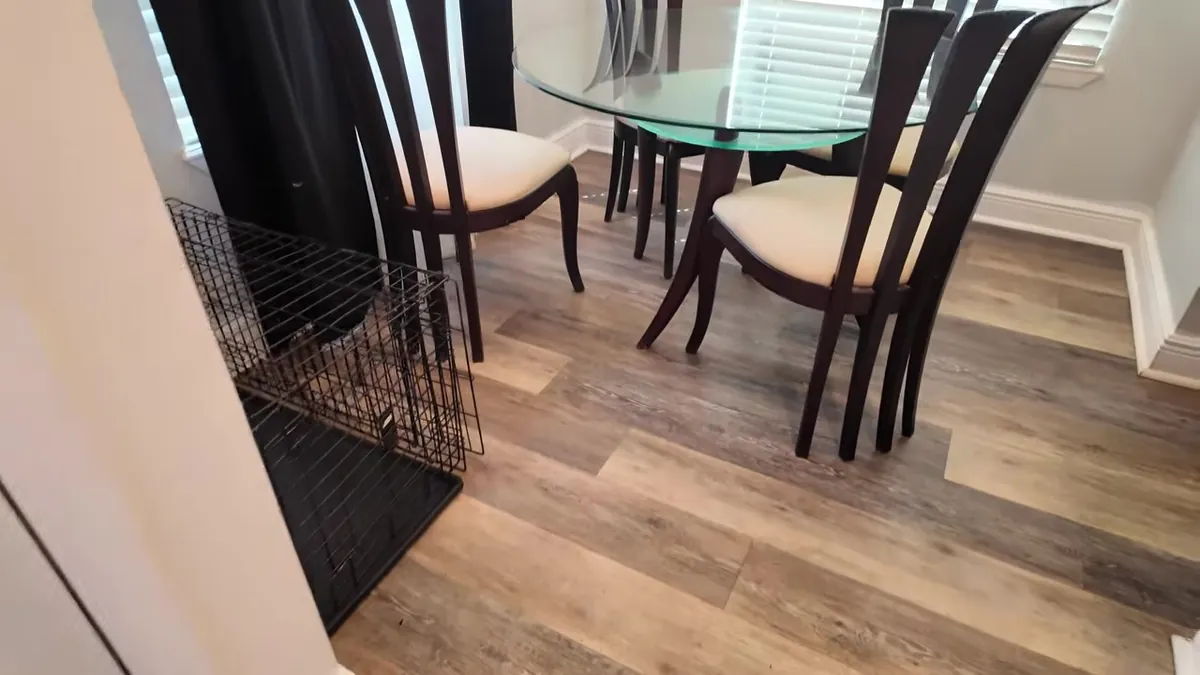
You walk in to the dining area and kitchen. In the kitchen I did what I always do on a remote tour: I opened things and tested things. The water works. There is a refrigerator, plenty of cabinet space, and a dishwasher. I opened the cabinet under the sink, because that is where small leaks show up first, and it looked fine.
I also told the buyer about the microwave. I believe the built-in microwave is broken, because there was a second microwave in use. That is a small thing. I mention it anyway, and I will explain why in a minute.
The air conditioning was working when I was there. It was set at 77, and it was cooling. On a remote tour I always point the camera at the thermostat and stand under a vent, because a buyer cannot feel the air through a screen. Saying out loud what the setting is and whether it is cooling is the next best thing.
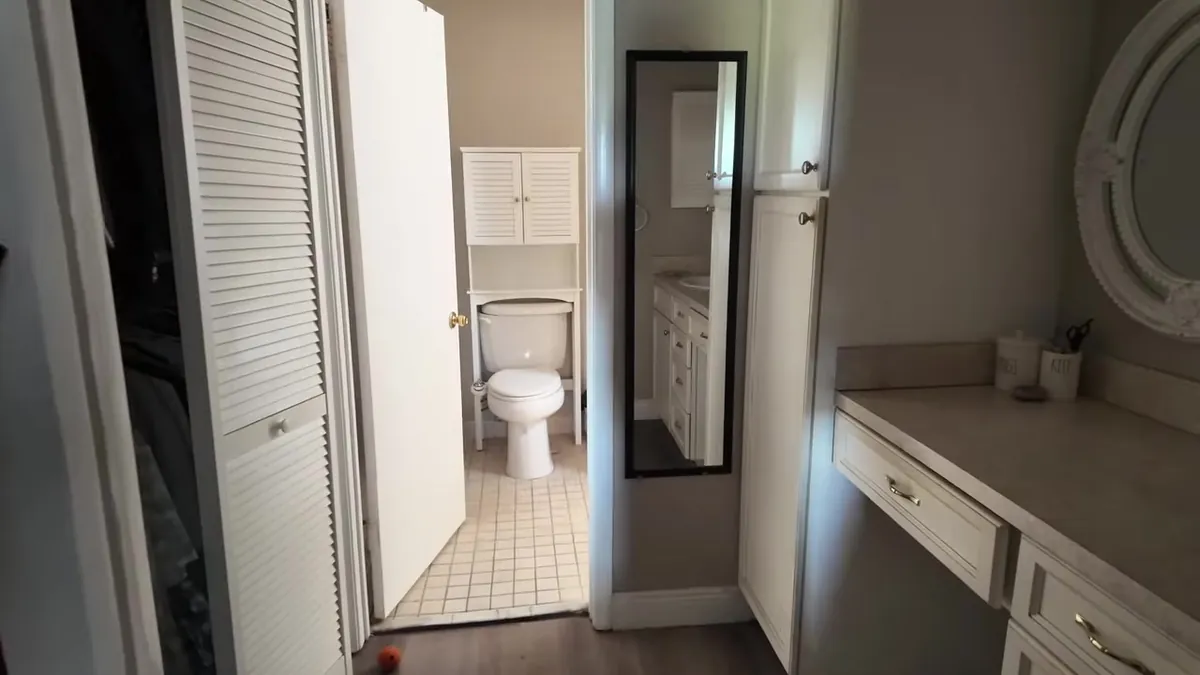
Half bath downstairs
There is a half bath on the first floor. I pointed out a spot on the ceiling in there. There was a leak a long time ago, and it was fixed, and that ceiling area was repaired and painted. The ceiling has a popcorn texture. A repaired ceiling spot is the kind of thing that can look scary in a photo and turn out to be old news in person, or the other way around. That is exactly why it belongs in the video and in the written disclosures, and why I would want an inspector to look at it.
Living room, fireplace and patios
The TV room has a working wood-burning fireplace. That is not something you see in every Florida condo, and for some buyers it is a real draw on the few cold nights we get. There is a ceiling fan. From this level you have a patio, and off the first-floor patio there is a storage area with a power outlet, which is handy for bikes, fishing gear or kayak paddles.
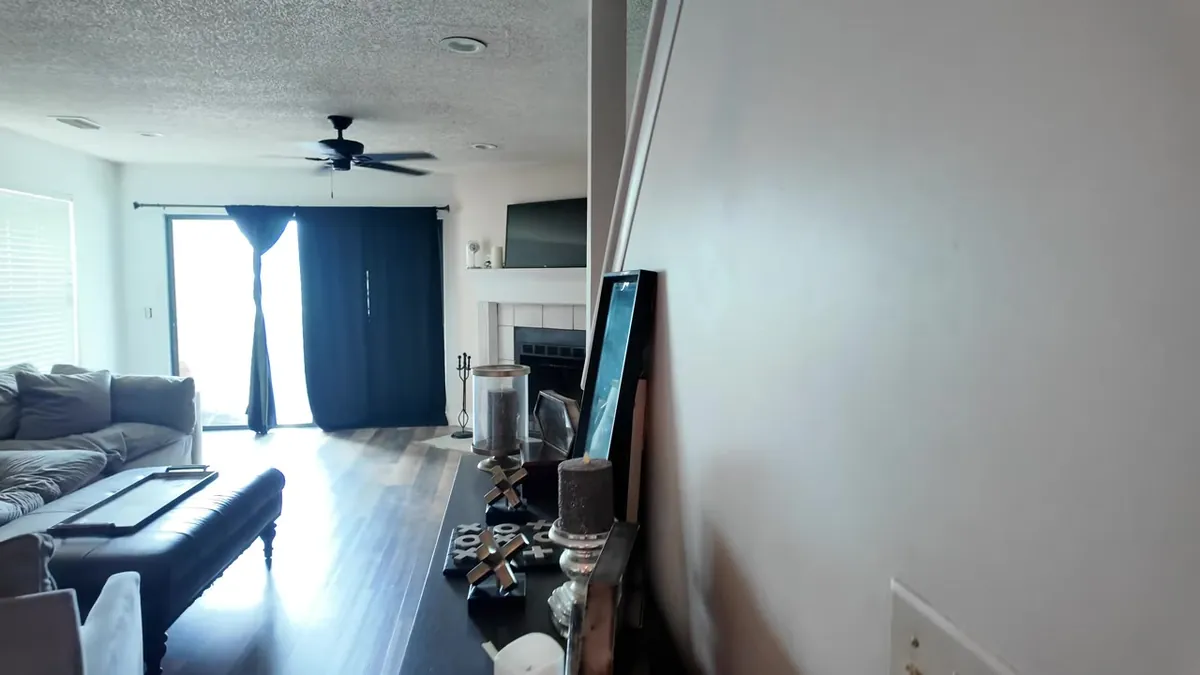
The unit has two patios. From the first one you look out at the view, and you can see a road and a bridge back there. I filmed the views from both, because how a patio feels depends on what you are looking at and what you are hearing.
Upstairs bedrooms and baths
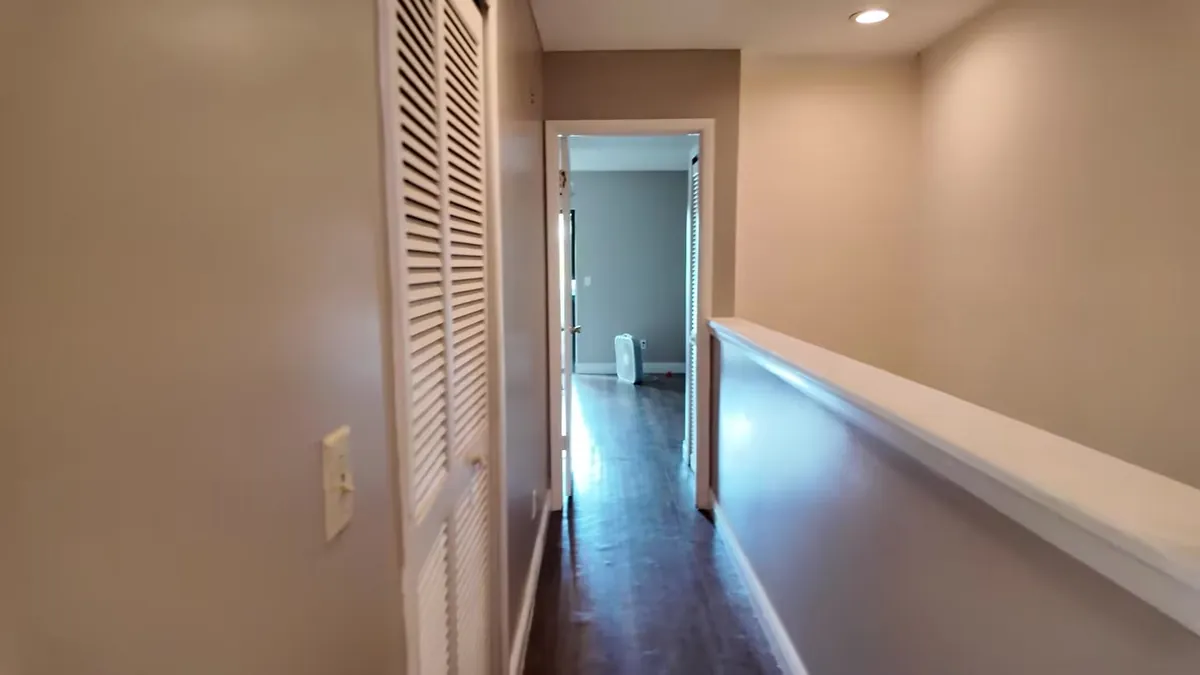
Upstairs there are two bedrooms and two full bathrooms, so the layout is a half bath downstairs and two full baths up. One of the bedrooms fits a queen-size bed, which I said on camera because room size is another thing that is hard to judge through a phone. The owner's bathroom has one sink and a shower, and the closet has bifold doors. The light works and the bathroom fan works. I tested both.
The systems
At the end of the tour I showed the buyer where the water heater is, where the air conditioning equipment is, and where the electrical panel is. Those three locations are things every buyer should know before closing, and things an inspector will look at closely. On video, I film the labels and model plates when I can, so a buyer can look up ages and specs later.
Why I Point Out the Flaws on Camera
I mentioned the microwave and the ceiling spot on purpose. A video tour is only useful to a remote buyer if they trust it. If I only show the pretty angles, the buyer has to assume I am hiding something, and they would be right to. When I point out a broken microwave and an old repaired leak, the buyer learns two things: what the small issues are, and that I will tell them about the small issues.
Here is how I think about it. A remote buyer is relying on me to be their eyes. That means the video should feel like walking the property with someone who is on their side. Sometimes that means saying "this looks great." Sometimes it means saying "I would want an inspector to look at this." Usually it means both in the same tour.
That honesty also protects everyone later. When the small items are out in the open early, they do not turn into surprises at the inspection or the final walkthrough. A surprise is what makes a remote buyer nervous. Information, even unflattering information, is what makes them comfortable.
Video is not a disclosure
A video is a helpful record, but it is not a substitute for the seller's written disclosures, the inspection report or the condo documents. If you see something in a video that concerns you, write it down and ask about it in writing. Ask your agent to request any repair records. For the half bath ceiling in this unit, for example, a buyer would want to know when the leak happened, what caused it, what was repaired, and whether there were any related insurance claims.
My Remote Video Tour Checklist
If you are buying from out of state, you can ask your agent to follow a checklist like this one. If your agent does not want to do this kind of tour, that tells you something too.
- Start at the entrance. Film the gate or entry, the drive in and where you would park.
- Walk the route from the car to the door. Count the stairs out loud. Note any elevator or lack of one.
- Show the amenities you are paying for. Pool, courts, docks, storage, open space.
- Film the views from inside first, then outside. That shows the real distance and angle.
- Open every door and closet. Including the patio storage and the closets with bifold doors.
- Run the water. Kitchen and every bathroom. Look under each sink with a light.
- Test the appliances on camera. If one does not work, say so.
- Read the thermostat and stand under a vent. Say the setting and whether it is cooling.
- Turn on lights and fans in every room.
- Look up. Film the ceilings, especially in bathrooms and under upstairs rooms.
- Find the water heater, the air conditioning equipment and the electrical panel. Film labels if possible.
- Listen. Pause for a few seconds in the living room and bedroom so the buyer can hear road, neighbor and water noise.
- Talk through the good and the bad. Then send a written list of what you noticed.
What a Video Tour Shows, What It Misses, and How to Close the Gap
A good video tour gets you a long way. It does not get you all the way. Here is how I think about the gap, based on what I can and cannot capture with a phone on a walkthrough like this one.
| Item | A good video tour shows | A video can miss | How to close the gap |
|---|---|---|---|
| Layout and flow | How rooms connect, stairs, where the patios are | How big a room really feels | Ask for measurements or a floor plan |
| Condition | Visible wear, repaired spots, appliance function | Smells, humidity, soft spots in floors | Professional inspection, ideally with you on a video call |
| Systems | Location of water heater, AC and panel | Age, capacity and hidden problems | Inspector report plus photos of labels |
| Noise | Some road and water sound | Noise at night, weekends, neighbors | Ask for a short clip at a different time |
| Views | What you see from the windows | Distance, angle, what is blocked | Exterior shots and an aerial view |
| Community | Gate, pool, courts, docks, grounds | How the association is run financially | Request the condo documents and financials |
| Boat slips and storage | That slips, a dock and kayak storage exist | Who owns them and what they cost | Written answers from the association and owner |
| Rules | Signs, posted rules | Pet, rental, parking and boat restrictions | Read the rules and bylaws before you commit |
The Condo Documents Matter More Than Any Video
This is the part of buying a condo that out-of-state buyers most often rush, and it is the part that can matter most over the years you own the unit. A video shows you the building. The documents show you how the building is run, how it is paid for and what you are agreeing to.
I am not your attorney, and I am not going to tell you what any specific document means for you. What I can tell you is what I would ask for and read before committing to a condo in a community like this one:
- The declaration, bylaws and rules. These cover pets, rentals, parking, boats and trailers, use of the pool and courts, and much more.
- The current budget. It shows where your dues go and what the association expects to spend.
- Reserve information. How much is set aside for big future costs like roofs, paving and building repairs.
- Recent financial statements. Look for whether the association is collecting what it budgets.
- Insurance information. What the association's master policy covers and what you would need to cover with your own policy.
- Meeting minutes from the last year or so. Minutes often mention upcoming projects, disputes and possible special assessments before anything is official.
- Any pending or planned special assessments. Ask directly, in writing.
- Boat slip, dock and kayak storage rules. Including who owns what and how slips change hands.
- A statement of what is owed on the unit. Your closing agent typically orders this from the association so dues and any balances are handled at closing.
Read these with your agent, and if anything worries you, with a Florida real estate attorney. Questions about the documents are normal. A community that is well run is usually happy to answer them.
How to Think About the Monthly Cost of a Condo
With a condo, the purchase price is only part of the picture. Out-of-state buyers sometimes compare a condo payment to a house payment back home and forget the association dues. The dues are not a bad thing. They pay for things you would otherwise pay for yourself, like grounds care and amenities. But they belong in the monthly number from day one.
When I run a monthly cost for a buyer, I put four or five pieces on one line: the loan payment, the association dues, the property tax, the unit owner's insurance, and, for a water-access community, any slip or storage cost if you plan to use one.
Once you see the full number, you can compare it honestly with a single-family home, where you would be paying for your own yard work, exterior maintenance and roof, and probably for a pool membership or a boat storage spot if you want those things.
Property Taxes Change When You Buy: Homestead and Save Our Homes
This one surprises a lot of buyers coming from out of state. In Florida, the property tax bill the current owner pays is not necessarily the bill you will pay. There are two reasons.
The Save Our Homes cap resets when a property sells
Florida law limits how much the assessed value of a homesteaded property can go up each year, and that limit, called Save Our Homes, ends with a change of ownership. The statute says the property is assessed at just value as of January 1 of the year following a change of ownership, with exceptions listed in the law (Florida Statutes s. 193.155). The Duval County Property Appraiser puts it plainly: if you buy a home from someone who currently has a Save Our Homes cap in place, that cap will be removed and the assessed value will go to market value, unless you have portability (Duval County Property Appraiser, Save Our Homes). Both accessed Nov 4, 2026.
In practical terms, when you are looking at a listing, do not assume the current tax bill is your future tax bill. If the seller has owned for a long time and has a homestead exemption, the bill after you buy may be noticeably higher.
Homestead exemption if the condo will be your permanent home
If you are relocating and the condo will be your permanent residence, you may be able to claim a homestead exemption. Florida law provides the exemption to a person who, on January 1, has title to the property and makes it his or her permanent residence, and it specifically addresses condominium parcels occupied by their owners (Florida Statutes s. 196.031). Florida law also requires the application to be filed with the county property appraiser on or before March 1 (Florida Statutes s. 196.011). The Duval County Property Appraiser says condominiums are eligible, that you must own and occupy your home as your permanent residence on January 1, and that the timely filing deadline is March 1 (Duval County Property Appraiser, Exemptions). All accessed Nov 4, 2026.
If you are buying the condo as a second home or a rental, the homestead exemption is not for you, and the tax estimate should not include it. If you had a homestead in another Florida county before, ask the property appraiser about portability. The Duval page explains that portability is a separate application with the same March 1 deadline.
These are made-up numbers. Some portions of the exemption do not apply to every tax, and rates vary. Use the property appraiser's own estimator or ask your lender for a realistic tax figure before you commit.
Closing Costs a Buyer Should Expect in Duval County
Remote buyers tend to focus on the down payment and forget that there are taxes collected when a mortgage is recorded in Florida. If you are financing, two of them apply to the loan itself.
Florida law sets documentary stamp tax on mortgages and other evidences of indebtedness at 35 cents on each $100 of the amount secured (Florida Statutes s. 201.08), and it imposes a one-time nonrecurring intangible tax of 2 mills on each dollar of notes secured by a mortgage on Florida real property (Florida Statutes s. 199.133). The Duval County Clerk of Courts records deeds and mortgages for the county, and its recording page includes a fee calculator that figures doc stamps and intangible tax when a mortgage is recorded, along with the recording fees per page (Duval County Clerk of Courts, Recording). All accessed Nov 4, 2026.
Those two items are only part of a buyer's closing costs. Your lender's loan estimate and your title company's figures will list everything else, like title insurance, lender fees, prepaid interest, and the prorated association dues and taxes. Ask for those numbers early so nothing surprises you at the closing table, especially when you will not be sitting at it.
This Unit Is a Short Sale: What That Means for a Buyer's Timeline
This condo is being sold as a short sale. I am not going to get into the owner's situation, and you should never expect an agent to share that kind of thing. What matters for a buyer is the process. A short sale needs the lender's approval, and that takes patience. The video description says it directly: short sales can take patience and lender approval, but they can also create opportunity for the right buyer.
For a remote buyer, a short sale timeline actually has an upside. It gives you more time to review documents, line up an inspection, talk with the association and plan your move. The downside is uncertainty: you do not control when the approval comes, and the terms can change. If you need to be in your new place by a hard date, talk that through with your agent before you make an offer.
Short sales deserve their own article, and I will be writing more about how buyers can approach them. For this one, the takeaway is simple: if you love a short sale listing, plan for a longer runway and keep your financing ready the whole time.
How to Inspect a Condo You Cannot Visit
If you are buying out of state, the inspection is the single most important thing you will not see in person. Here is how I help remote buyers handle it.
- Hire a licensed home inspector who is experienced with condos, and ask whether they can do a short video call during or after the inspection.
- Give the inspector your notes from the video tour, like the old half-bath leak and the microwave in this unit, so they look closely at the items you already know about.
- Ask about the systems you saw on camera: the water heater, the air conditioning and the electrical panel.
- Ask about the fireplace. A wood-burning fireplace is a nice feature. Ask whether it should be inspected by a specialist before you use it.
- Ask about moisture. In a water-friendly community in Florida, I want an inspector looking for signs of past or present moisture anywhere it could hide.
- Ask about insurance-related items. Some insurers ask about the age and condition of certain systems. Your insurance agent can tell you what they need.
- Read the full report, not just the summary, and talk through it with your agent before your inspection period ends.
Remember that in a condo, some items, like the roof, the exterior walls and the common areas, are usually the association's responsibility. That is one more reason the condo documents matter. The inspection tells you about the unit. The documents tell you about everything around it.
How a Remote Closing Usually Works
A lot of my out-of-state buyers never set foot in the title office. Here is the general shape of how that works. The exact process depends on your title company and your lender, so ask them early.
- Choose a title company or closing attorney who handles remote and mail-away closings regularly.
- Confirm how you will sign. Some closings are done by mail with a local notary near you. Some use an online notary over video. Your lender has to approve the method.
- Confirm wiring instructions by phone using a number you already know is real, not a number from an email. Wire fraud targets real estate closings.
- Schedule a final walkthrough by video a day or two before closing, so you know the unit is in the condition you expect.
- Plan key handoff, gate codes and parking. In a gated community like this one, you will need the gate code and your parking assignment, and possibly a fob, sticker or association registration.
- Get copies of everything you sign and keep them in one folder.
The final walkthrough by video
The final walkthrough is where my remote video tour habits pay off again. I walk the same route as the first tour, run the same tests, and show the buyer that anything agreed to in the contract has been done. If something has changed since the first video, we see it right away and can deal with it before closing, not after.
Who a Water-Access Condo Like This Fits
Every buyer is different, but here are the people I think a community like Cedar Creek Landing tends to fit, based on what I saw walking it:
- Kayakers and small-boat owners who want to be close to the water without the upkeep of a waterfront house.
- Anglers and crabbers who like having water steps from the door.
- Lock-and-leave owners who will be away for stretches and like a gate and reserved parking.
- Dog owners who want open green space nearby.
- Buyers who want low exterior maintenance, since the association maintains the grounds.
And here is who might want to think twice: buyers who want a big boat on a private dock, buyers who cannot do stairs every day, and buyers who are not comfortable with association rules and dues. None of that is good or bad. It is just fit.
Before You Make an Offer From Out of State
Here is the short list I go over with every remote buyer before they make an offer on a condo:
- Watch the full video tour, then write down every question it raised.
- Ask for a written list of what the agent noticed, good and bad.
- Get a monthly cost estimate that includes dues, taxes and insurance.
- Ask for the condo documents, or at least confirm when you will receive them.
- Ask about any amenities you care about, like slips, storage, pets and rentals, in writing.
- Get pre-approved, and tell your lender it is a condo so they can review the community.
- Get an insurance quote for the unit.
- Plan your inspection and how you will attend it remotely.
- Decide what timeline you can live with, especially for a short sale.
- Pick a title company that does remote closings well.
Frequently Asked Questions
Can I buy a condo in Jacksonville without seeing it in person?
Many buyers do. A detailed video tour, a professional inspection, a careful read of the condo documents and a remote closing can get you to the finish line. It does take more discipline than buying in person, so build in time to ask questions.
What should a video tour of a condo include?
The entry and parking, the route to the door, the amenities, every room, every closet, the views from inside and outside, running water, appliances, the thermostat, lights and fans, the ceilings, and the location of the water heater, AC and electrical panel.
Is Cedar Creek Landing on the water?
The community sits along Cedar Creek, which leads out to the St. Johns River. In the video I showed the dock, kayak storage and the water's edge. Check the exact view and distance from any specific unit you are considering.
Can I keep a boat there?
The community is set up for kayaks and boats that can be trailered, and I saw trailered boats and jet skis in the lot. Boat slips are owned and bought from owners. Verify availability, ownership, rules and any costs directly before you commit.
Is there a pool or other amenities?
Yes. There is a pool, a tennis court that may also work for pickleball, open green space and reserved parking inside a gated entry. Confirm court use and other rules with the association.
Who maintains the grounds?
The homeowners association maintains the grounds. That is part of what the monthly dues pay for.
What condo documents should I ask for?
The declaration, bylaws and rules, the budget, reserve information, recent financial statements, insurance information, recent meeting minutes, and any planned special assessments. Read them with your agent and, if needed, a Florida real estate attorney.
Will my property taxes be the same as the seller's?
Not necessarily. In Duval County, a Save Our Homes cap is removed when a home sells and the assessed value goes to market value, unless the new owner has portability. If the condo is your permanent home, you may qualify for a homestead exemption by filing by March 1.
Can I get a homestead exemption on a condo?
The Duval County Property Appraiser lists condominiums as eligible if you own and occupy the unit as your permanent residence on January 1 and file on time. A second home or rental does not qualify.
What does a short sale mean for me as a buyer?
It means the seller's lender has to approve the sale, which usually takes longer than a regular sale. Plan for patience, keep your financing ready and talk through timing with your agent before you make an offer.
How do I attend the inspection if I live out of state?
Ask your inspector for a short video call during or after the inspection, share your notes from the video tour, and read the full report with your agent before the inspection period ends.
Can I close without flying to Florida?
Often, yes. Many closings are done by mail with a notary near you or with an online notary, if your lender approves. Ask your title company early what they offer.
How do I avoid wire fraud on a remote closing?
Never trust wiring instructions from an email alone. Call your title company at a number you already know is real and confirm the instructions before you send money.
Do the appliances come with the unit?
Ask for a written list of what conveys. In this unit, I noted on camera that the built-in microwave looked broken and a second microwave was in use, which is exactly the kind of item to clarify in writing.
Will you film a video tour for me?
Yes. I do this for buyers all the time. Tell me what matters most to you and I will make sure the video covers it.
Thinking about your next move?
I will walk the property for you on video, tell you what I see, good and bad, and help you line up the documents, inspection and closing so you can decide from wherever you are.
Get My Home ValueCall 904-606-9163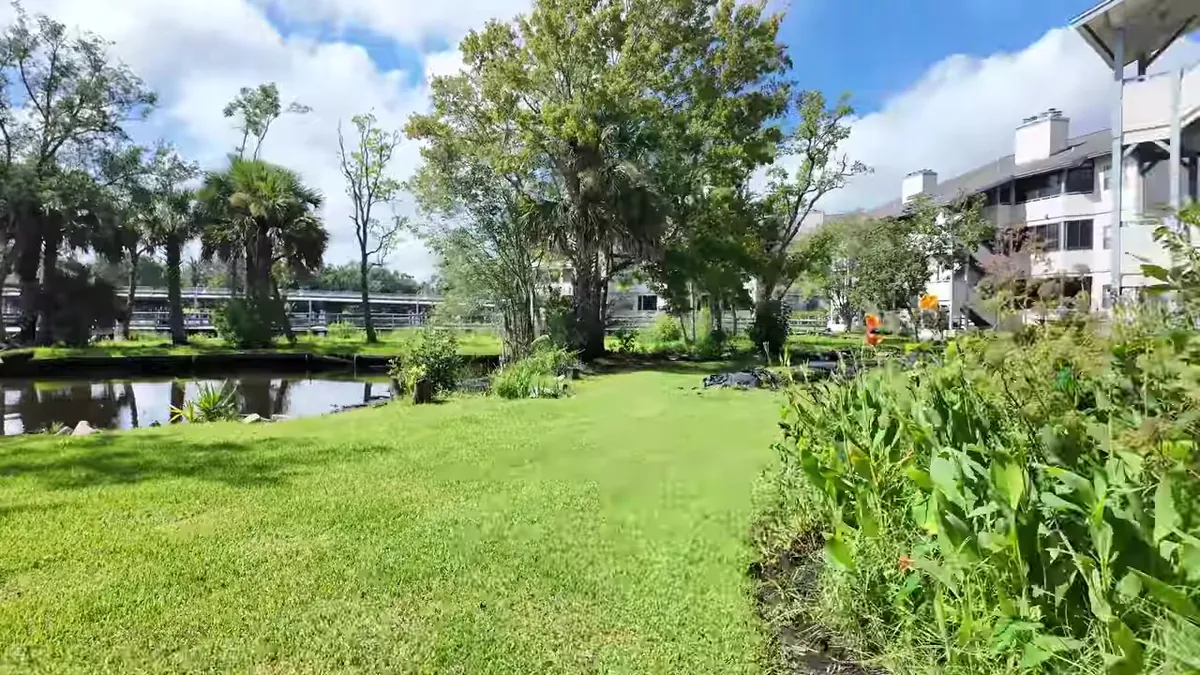
Sources
Every Florida legal and tax fact above was checked against a Florida Statute and a Duval County official source. Each link was opened and read on Nov 4, 2026. Facts about the property come only from my walkthrough video, its title and its description.
- Florida Statutes s. 193.155, Homestead assessments (accessed Nov 4, 2026)
- Florida Statutes s. 196.031, Exemption of homesteads (accessed Nov 4, 2026)
- Florida Statutes s. 196.011, Annual application required for exemption (accessed Nov 4, 2026)
- Florida Statutes s. 201.08, Tax on promissory notes and mortgages (accessed Nov 4, 2026)
- Florida Statutes s. 199.133, Levy of nonrecurring tax (accessed Nov 4, 2026)
- Duval County Property Appraiser, Save Our Homes (accessed Nov 4, 2026)
- Duval County Property Appraiser, Homestead and Other Exemptions (accessed Nov 4, 2026)
- Duval County Clerk of Courts, Recording (accessed Nov 4, 2026)
This article is general information, not legal, tax or financial advice. Talk with a Florida real estate attorney, a tax professional and your lender about your own situation.