
What a Short Sale Looks Like From the Buyer's Side
Most of what you read about short sales is written for the homeowner who owes more than the house will sell for. That makes sense. The seller is the one in a tough spot. But every short sale also needs a buyer, and the buyer's experience is very different. You are not dealing with a hardship. You are dealing with a process, and the process has its own rules.
In the video I said it simply: this will be a short sale, so it will take a little bit longer. Then I said the other half of it: it is a chance for you to get a house on a discount. Those two sentences are the whole deal from a buyer's point of view. You may get a newer house for less than you would pay for a comparable home in a normal sale, and in exchange you accept more waiting, more paperwork and a house that may need some work.
I want to be careful with the word discount. A short sale is not a guaranteed bargain. The lender that is agreeing to take less than it is owed is not trying to give you a gift. It is trying to recover as much as it reasonably can without going through a foreclosure. So the price has to make sense to the lender, and it usually has to line up with what the house is really worth in its current condition. The discount, when there is one, often comes from the condition, the wait and the fact that many buyers do not have the patience for the process.
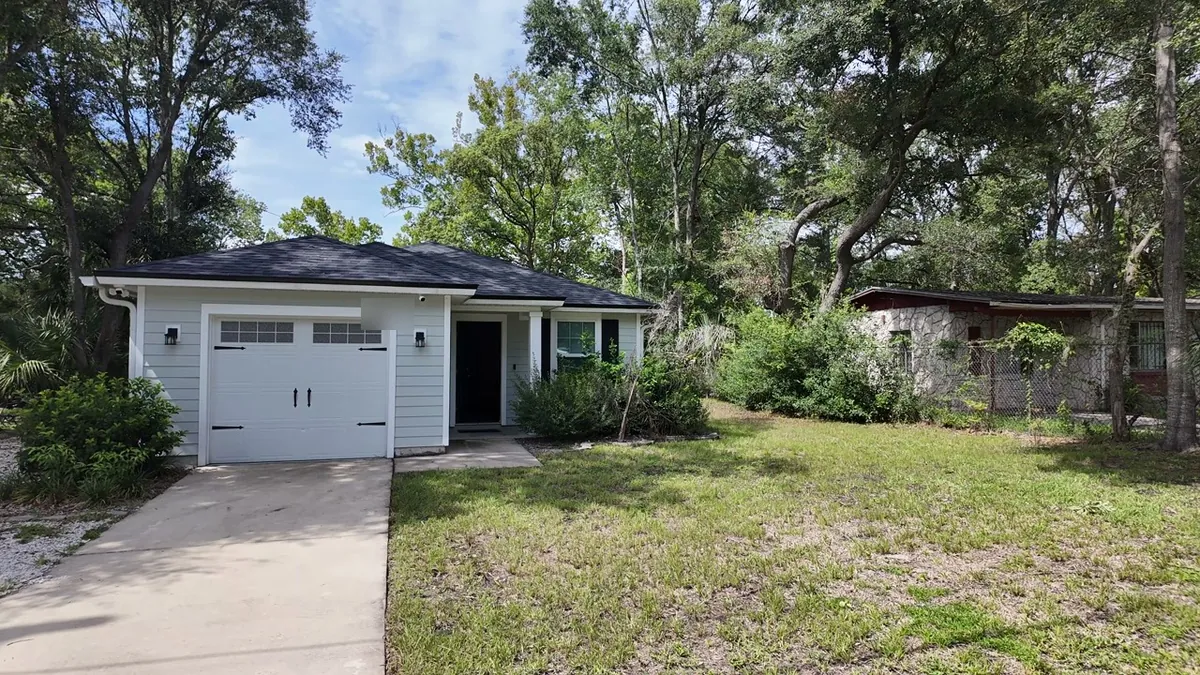
That is exactly why this house is a good example. It is a 2023 build. Three bedrooms, two baths, about 1,200 square feet. A single-car garage, a gravel area on the side to park, gutters, and a big backyard with a fire pit. The bones are new. What it needs is cleaning, some flooring work and someone willing to wait.
A quick note on privacy. I am not going to give the street, the house number or anything about the owner in this article. The facts about the property here come only from my walkthrough video, its title and its description. If you want to see the home, reach out and I will get you the details directly.
Who Has to Say Yes, and Why That Changes Everything
In a normal sale there are two parties who matter: the buyer and the seller. You make an offer, the seller accepts, counters or says no, and you are under contract. In a short sale there is a third party that matters just as much, and sometimes more: the seller's lender, and sometimes more than one lender if there is a second loan on the house.
Because the sale price will not pay off what the seller owes, the lender has to agree to accept less. Until it does, the seller cannot close. That means your accepted offer is really a conditional deal. The seller has said yes to you, and now the seller's side sends your offer to the lender with a package of financial documents and waits for an answer.
Here is how I explain it to buyers. You are not negotiating with one decision maker. You are negotiating with a seller who wants out, and a lender who wants the best recovery it can get. The seller's agent and, often, a short sale negotiator manage the lender side. Your agent's job is to make your offer clean, believable and easy for that lender to approve.
What a strong short sale offer looks like
- A price that matches the house today. Lenders usually order their own valuation. An offer far below what the house is worth in its current condition tends to get countered or turned down, and it costs everyone time.
- Proof you can close. A preapproval letter from a lender who has done short sales before, or proof of funds if you are not financing. The lender wants to know the deal will not fall apart after it says yes.
- A realistic timeline. Do not write a 30-day close and hope. Write a contract that allows for the approval period, then a reasonable closing window after approval.
- Clear terms on condition. Short sales are commonly sold as is. Say how you will handle inspection, and do not count on the seller paying for repairs.
- Few extras. Every request for seller-paid costs comes out of the lender's recovery. Ask for what matters and leave out what does not.
- Patience in writing. If you are willing to wait, your offer should show it. A buyer who walks away in week three is a buyer the seller's side remembers.
None of this means you give up your protections. You still inspect. You still get an appraisal if you are financing. You still read every document. It just means you build an offer that fits how short sales actually move.
The Timeline: What Waiting a Little Bit Really Means
At the end of the video I said that if you are looking for a house under market value, you have to wait a little bit on the short sale. That is honest, and it is the part buyers underestimate most.
Every short sale is different, but the phases tend to look the same. First there is the period between your accepted offer and the lender's decision. This is the longest and least predictable stretch. The lender reviews the seller's hardship and finances, orders a valuation, and decides whether your price works. It may say yes, counter with a higher number, or ask for more documents.
Once the lender approves in writing, the clock speeds up. Now it looks a lot like a normal sale: you finish inspections if any are still open, your lender orders the appraisal if it has not already, underwriting finishes, and you close within the window the approval letter allows. Approval letters often come with an expiration date, so after approval you want to move quickly.
Plan your life around the longer number, not the shorter one. If your lease ends in a month, a short sale may not be the right fit unless you can extend or go month to month. If you are flexible, the wait is where the opportunity comes from.
How to stay sane during the wait
- Ask your agent for a status update on a regular schedule, even if the update is "no news yet."
- Keep your financial picture steady. Do not open new credit, change jobs or make big purchases while your loan is pending.
- Keep your preapproval current. Lenders often need updated pay stubs and bank statements if the wait runs long.
- Keep looking if you want to, but understand your contract. Know whether and how you can walk away before approval, and talk with your agent or an attorney about it.
Financing a Short Sale: FHA, VA and Conventional
In the video I said this house still qualifies for probably FHA, VA and all that, and that it is a quality house because it was built in 2023. The description says it should qualify for FHA or VA. I want to be precise about what that means, because the word probably is doing real work in that sentence.
I am not a lender, and I do not decide whether a loan gets approved. Your lender decides whether you qualify, and the appraiser decides whether the house meets the standards your loan program requires. Government-backed loans like FHA and VA have property condition standards that the appraiser checks. A newer house with a good roof, a working water heater and working air conditioning starts in a strong position. Peeling flooring, a toilet that is out of service, or a beeping smoke detector are the kinds of items an appraiser may note. Whether any of them must be fixed before closing is a question for your lender.
Questions to ask your lender before you write an offer
- Have you closed short sale purchases before, and how did you handle the long approval period?
- How long is your preapproval good for, and what will you need to update it?
- How long can I lock a rate, what does an extension cost, and when should I lock on a short sale?
- What condition items would your appraiser likely call out on a house like this, and who has to fix them?
- If the lender for the seller counters at a higher price, how does that change my payment and the funds I need at closing?
- What happens to my file if approval takes longer than expected?
Rate locks deserve their own note. On a normal sale you lock and close inside the lock period. On a short sale you usually do not want to lock until you have the seller's lender approval in hand, because you do not know when you will close. Your lender can explain the tradeoff. The point is to have the conversation early so the wait does not surprise you.
That example is made up, but the habit is real. Before you write the offer, know the highest price that still works for you, so a counter from the seller's lender becomes a quick decision instead of a crisis.
Inspecting a 2023 House That Needs Cleaning
This is my favorite part of a house like this, because buyers often get the wrong idea. A house can look rough and be in good shape, and a house can look great and hide problems. Cleaning and cosmetic wear are not the same thing as structural issues.
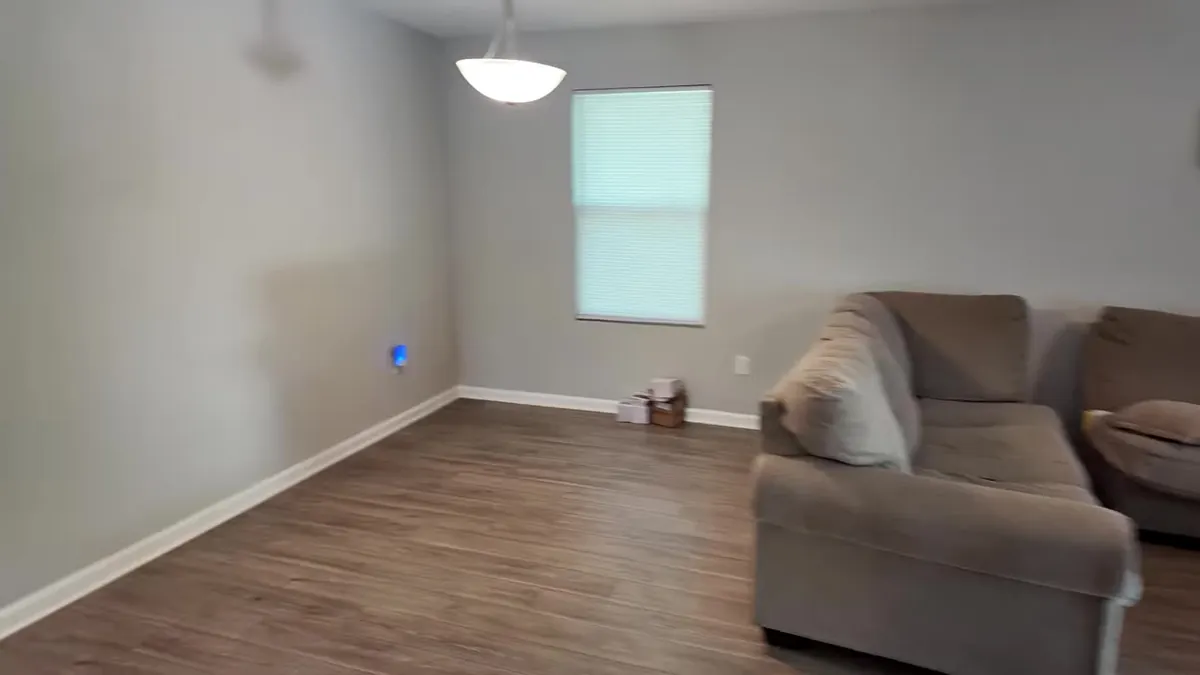
Here is what I saw and said in the walkthrough. The house was built in 2023. The roof is good. The water heater is good. The air conditioning is a 2023 Carrier unit, and it worked well when I was there. The power was on, so the microwave, refrigerator, stove and dishwasher could be tested. There is a small pantry. The hall bathroom has a single sink, a toilet and a standard bathtub. The owner's suite has a good size walk-in closet, a bathroom with two sinks and a walk-in shower, and a ceiling fan in the bedroom. There are two more bedrooms, one of them smaller and usable as an office.
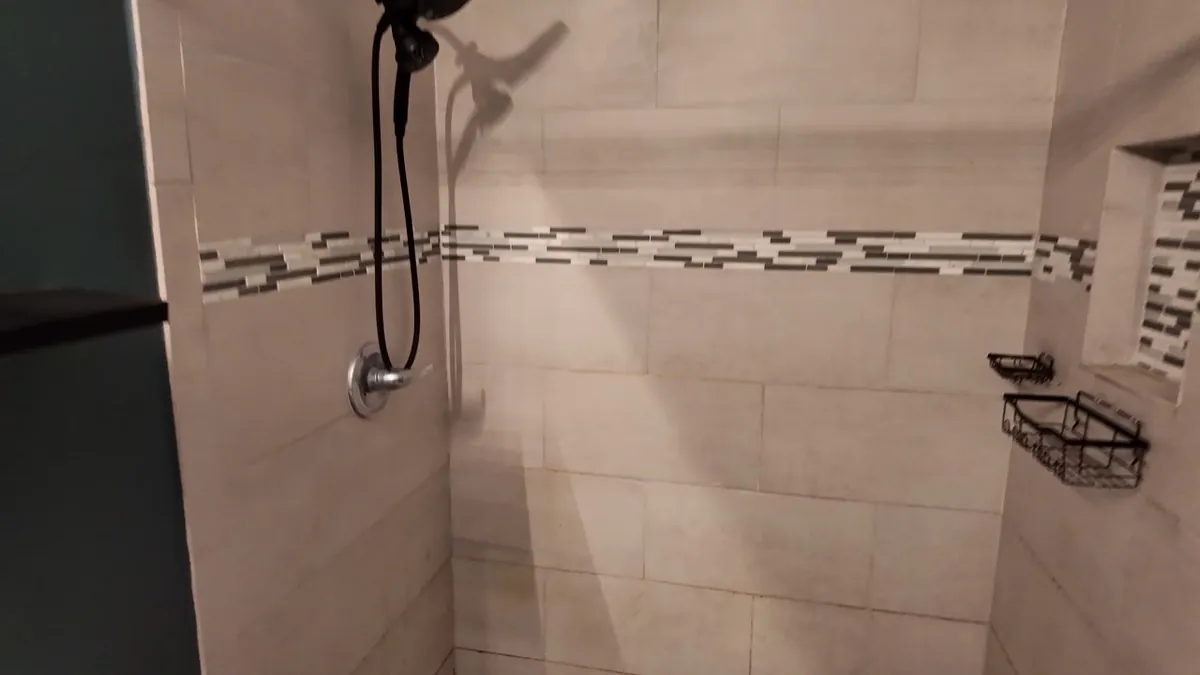
Now the honest part. In the owner's suite some of the stick-down tile flooring is peeling up. I said in the video that is just the cost of getting a house on a discount. One toilet had tape over it so no one would use it during showings. The previous occupants left the house dirty, and I said it really needs a cleaning. A smoke detector was beeping, which I needed to track down. Furniture and belongings were left behind, and I said those can be cleared out before anyone moves in.
None of those are the kind of items that scare me on a 2023 house. But my opinion is not an inspection. You want a licensed home inspector to look at it, and you want to read the report with a calm head.
How I sort an inspection report on a house like this
- Safety items first. Smoke detectors, electrical issues, anything with gas or water heating. These get fixed no matter what.
- Systems second. Roof, air conditioning, water heater, plumbing, electrical panel. On a newer house these should be in good shape. If they are not, that changes the price conversation.
- Water third. Any sign of leaks, moisture under sinks, around toilets or at the shower. Water problems get expensive when they are ignored.
- Flooring and finishes fourth. Peeling tile, scuffed walls and dirty grout are real, but they are usually budget items, not deal breakers.
- Cleaning last. Dirt and dust look terrible in photos and cost the least to fix.
Ask the seller's side what paperwork exists for the house. On a 2023 build, it is worth asking whether there are any manufacturer or builder warranty documents, permits or manuals for the systems. Whether any warranty applies to a new owner depends on the documents themselves, so read them or have a professional read them. Do not assume.
Inspection timing on a short sale
Buyers often ask when to inspect. Some inspect right after the seller accepts, so they know what they are waiting for. Others wait until the lender approves, so they do not spend money on a deal that might not happen. There is no single right answer. Talk with your agent about how your contract handles the inspection period, and make sure you are not giving up your right to inspect just because the process is long.
As Is, and What Conveys
Short sales are commonly sold as is. In practice that means the seller usually is not going to make repairs, and the seller's lender is not going to pay for them either. It does not mean you cannot inspect, and it does not mean you cannot renegotiate if you find something serious. It means you should expect to handle the work yourself after closing.
The details of what stays with the house matter just as much. In this walkthrough I said it plainly. The kitchen appliances stay, including the refrigerator. The laundry does not convey. The seller needs the washer and dryer back. The items left by the previous occupants can be cleaned out, and the furniture can be removed.
Get it in writing
- List the appliances that stay by name in your contract: refrigerator, range, microwave, dishwasher.
- Note that the washer and dryer do not convey, so you budget for your own.
- Agree on who clears out the belongings and furniture, and by when.
- Agree on the condition the house will be in at your final walkthrough, like broom clean, so there is no surprise on closing day.
I clean out houses all the time. This one is a very minor cleanout compared to what I usually see. But the time to agree on it is before you sign, not the week of closing.
Is It Really a Discount After the Work?
This is the question I want every buyer to answer for themselves with real numbers. A short sale price that looks low can stop looking low once you add the work and the wait. A price that looks only a little low can turn into a very good deal if the work is cosmetic.
On this house, the work I saw was cleaning, peeling stick-down tile in the owner's suite, a toilet to sort out, a smoke detector to replace or fix, a washer and dryer you will need to buy, and finishing the fence along the open side of the backyard if you have a pet. Get real quotes for each. Then compare.
If your real discount is thin, a short sale may not be worth the wait. If it is meaningful and you can be patient, this is how people get newer homes for less.
Short Sale vs Regular Resale vs New Construction
Buyers who look at a 2023 house are often also looking at brand new construction and at regular resales. Here is how I compare them for a buyer.
| Question | Short sale | Regular resale | New construction |
|---|---|---|---|
| Who approves the deal | Seller, then the seller's lender | Seller | Builder |
| Typical timeline | Longer and less predictable | Usually 30 to 60 days after contract | Depends on build stage |
| Condition | Usually as is, may need cleaning or repairs | Varies, repairs often negotiated | New, with a punch list |
| Room to negotiate repairs | Limited | Normal | Limited to builder policies |
| Price | Can be below comparable homes, set with the lender in mind | Market price | Builder price, sometimes with incentives |
| What fits | Patient buyers with a flexible move date | Most buyers | Buyers who want everything new and can wait for the build |
A 2023 short sale sits in an interesting middle spot. You get much of the newness of new construction, without waiting on a builder, and you may pay less than a normal resale. In exchange, you take on the wait and the cleanup.
What Your Property Taxes Can Look Like After You Buy
This is the part that surprises buyers in Florida more than anything else. The tax bill the seller paid is not a reliable guide to the tax bill you will pay.
Florida's Save Our Homes rule limits how much the assessed value of a homestead property can rise each year, to 3 percent or the change in the Consumer Price Index, whichever is less (Florida Statutes s. 193.155). When a homestead property sells, that cap does not transfer to the buyer. The Duval County Property Appraiser explains that when you buy a home from someone who has a Save Our Homes cap, the cap is removed and the assessed value goes to market value for the next year (Duval County Property Appraiser, Save Our Homes). Both accessed Nov 4, 2026.
If you will live in the house as your permanent home, you may qualify for a homestead exemption. Florida law provides the exemption (Florida Statutes s. 196.031) and requires an application, with March 1 as the filing deadline (Florida Statutes s. 196.011). The Duval County Property Appraiser says you must own and occupy the home as your permanent residence on January 1, and the timely filing deadline is March 1 (Duval County Property Appraiser, Exemptions). All accessed Nov 4, 2026. Once you have homestead, the Save Our Homes cap starts protecting you in future years.
The made-up example is simpler than real life. Some parts of the exemption do not apply to every tax, and rates change by taxing authority. Use the Property Appraiser's tools and your lender's escrow estimate, and ask your agent to show you how the estimate was built.
Homestead steps for a new owner
- Close on the house and move in as your permanent home.
- Make sure you own and occupy it on January 1 of the tax year you are filing for.
- Gather what the Property Appraiser asks for, like your Florida driver license and vehicle registration showing the address.
- File the homestead application by March 1, online or by mail.
- If you had a homestead elsewhere in Florida, ask the Property Appraiser about portability when you file.
Closing Taxes a Financed Buyer Pays
If you finance your purchase, Florida taxes the mortgage when it is recorded. Documentary stamp tax on notes and mortgages is 35 cents per 100 dollars of the amount secured (Florida Statutes s. 201.08). A nonrecurring intangible tax of 2 mills, which is 0.002 times the amount of the mortgage, applies too (Florida Statutes s. 199.133). The Duval County Clerk of Courts recording page has a fee calculator that shows doc stamps, intangible tax and recording fees for mortgages and deeds (Duval County Clerk of Courts, Recording). All accessed Nov 4, 2026.
There is also a documentary stamp tax on the deed, at 70 cents per 100 dollars of the price (Florida Statutes s. 201.02, accessed Nov 4, 2026), and the same Clerk fee calculator covers deeds. Who pays which closing costs is set by your contract, so read that section carefully. On a short sale, the seller's lender will look at the closing statement line by line, so these items get attention.
Outside: Parking, Yard, Gutters and the Open Side
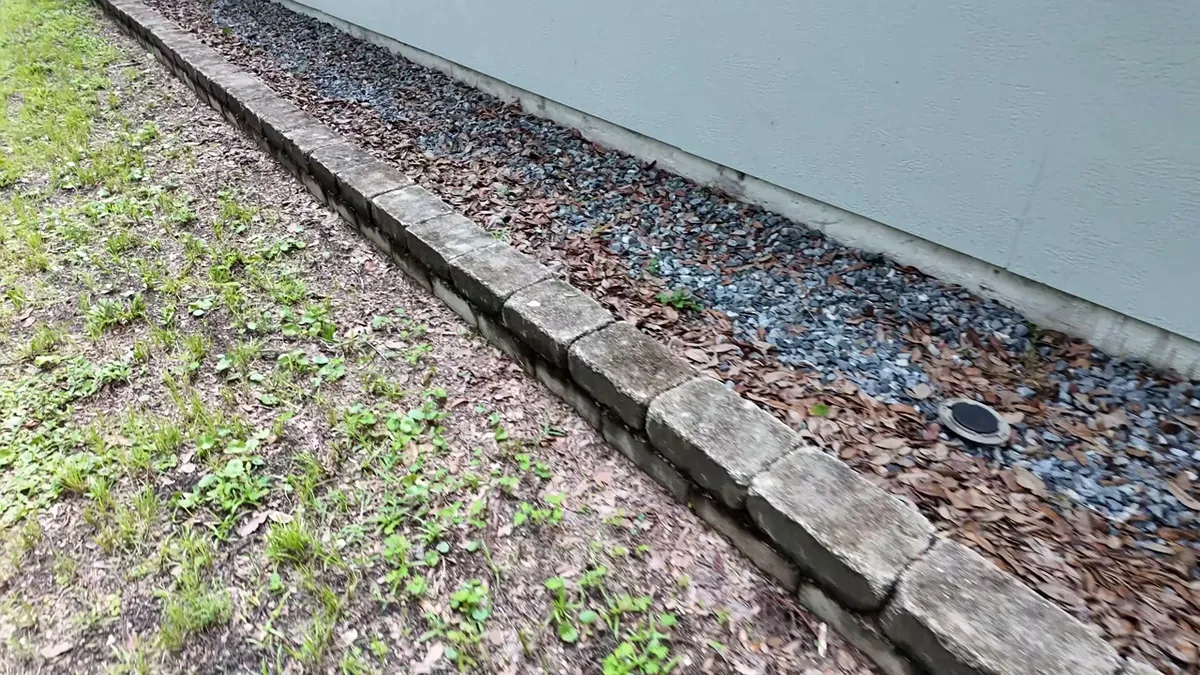
A lot of buyers fall in love inside and forget to look outside. On this house the outside is a big part of the value. There is a single-car garage. There is a rock bed on the side where you can park another car, and a side entrance that leads into the kitchen. The yard is a good size in front and back, and there is a good side lot too.
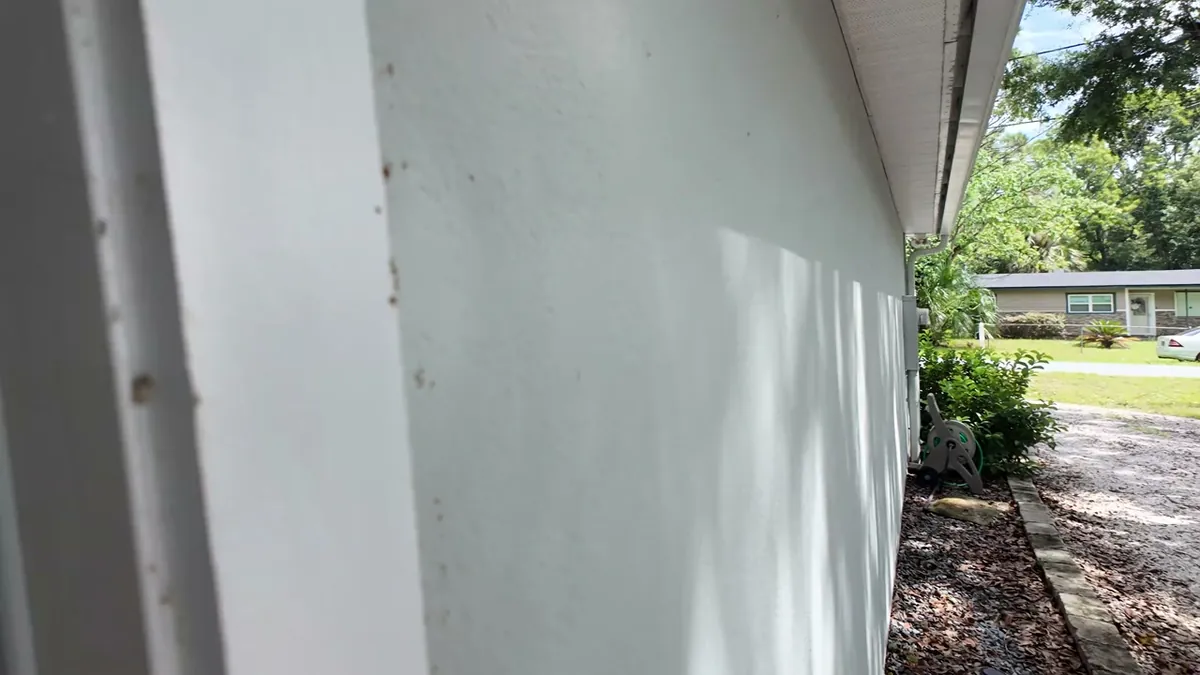
The backyard is partially fenced. The back is fenced, but one side is open. If you have a dog, you will want to close that side, and I said so in the video. Plan for it in your budget. Somebody built a little fire pit and hangout area in the back, which is a nice touch.
Two features I pointed out that buyers overlook: gutters and edging. The house has gutters, which matter in Florida, where hard rain is common. And someone set blocks and gravel along the edges with pavers to separate the beds from the grass. It makes yard work easier and keeps water and dirt where they belong.
Outside items to check before you commit
- Run water and watch where it drains. Gutters only help if the downspouts carry water away from the house.
- Look at the fence. Note which sides are fenced and price out the rest.
- Check the driveway, the gravel parking area and the side entrance for settling or drainage issues.
- Ask your inspector to look at the exterior of the air conditioning unit, the roof line and the siding.
- Verify the lot details yourself. The listing description says the buyer should verify zoning, permitted uses, dimensions, acreage, utilities and anything important to their intended use.
Mistakes I See Buyers Make on Short Sales
- Writing an offer they cannot wait on. If your lease or job will not allow a long wait, you will feel pressure to walk away, and you lose the time and money you put in.
- Lowballing to "test" the lender. Lenders compare your price to their own valuation. A lowball offer often just adds a round of counters.
- Skipping the inspection because the house is new. A 2023 house can still have issues. Inspect anyway.
- Not budgeting for what does not convey. Washer, dryer, fencing, cleaning. Small items add up.
- Assuming the old tax bill is the new tax bill. In Florida, the cap does not come with the house. Estimate taxes at your price.
- Locking a rate too early. Talk with your lender about lock timing before you sign.
- Making big credit changes during the wait. A new car loan during a long short sale can derail your approval.
- Not asking about approval letter deadlines. Once approved, you may have a set window to close. Be ready.
Your Short Sale Buyer Checklist
- Get preapproved with a lender who has closed short sale purchases, and ask how they handle long waits.
- Decide your highest workable price before you write the offer.
- Walk the house in person or on a video tour, and write down every item you see.
- Get rough quotes for cleaning, flooring, small repairs, appliances that do not convey and fencing.
- Run the real discount math: comparable move-in price minus price, work and waiting costs.
- Write a clean offer with proof of funds or preapproval, a realistic timeline and clear terms on condition.
- List what conveys and what does not, by name, in the contract.
- Agree on cleanout and the condition at the final walkthrough.
- Schedule a licensed home inspection at the time that fits your contract.
- Keep your finances steady and your preapproval current during the wait.
- When approval arrives, check the deadline and move quickly.
- After closing, file for homestead by March 1 if the house is your permanent home.
Frequently Asked Questions
What is a short sale, from a buyer's point of view?
It is a sale where the seller owes more than the house will sell for, so the seller's lender has to agree to take less. As a buyer, you make an offer like any other sale, but the deal cannot close until the lender approves it.
Why do short sales take longer?
Because the seller's lender has to review the seller's finances, value the house and approve your price. That review is out of your control and can take a while. After approval, closing tends to move like a normal sale.
Can I use an FHA or VA loan on a short sale?
Often, yes, as long as you qualify and the property meets your loan program's standards. In the video I said this house should probably qualify for FHA or VA financing. Your lender and the appraiser make that call, not me.
Can I inspect a short sale house?
Yes. Short sales are commonly sold as is, but as is does not mean you give up your right to inspect. Talk with your agent about the inspection period in your contract.
Will the seller fix anything?
Usually not. The seller is in a tough financial spot and the seller's lender does not want to pay for repairs out of its recovery. Plan to handle repairs yourself.
What stays with this house?
Per the walkthrough, the kitchen appliances stay, including the refrigerator. The laundry does not convey. Left-behind belongings and furniture can be cleared out. Put all of it in writing in your contract.
Is the peeling tile a big deal?
On this house it is a flooring repair in the owner's suite, not a structural issue. I called it the cost of getting a house on a discount. Get a quote and include it in your math.
Should I lock my interest rate right away?
Usually not before the seller's lender approves, because you do not know your closing date yet. Ask your lender how they handle rate locks on short sales.
Can the seller's lender raise the price?
Yes. The lender may counter at a higher price if it thinks your offer is too low. Know your highest workable number before you start.
Will my property taxes be the same as the seller's?
Probably not. In Florida, the Save Our Homes cap does not transfer to a buyer, and the assessed value can reset to market value the year after a sale. If it will be your permanent home, file for homestead by March 1.
What closing taxes will I pay if I finance?
Florida charges documentary stamp tax on the mortgage at 35 cents per 100 dollars and intangible tax at 0.002 times the mortgage. Your closing agent will show the exact figures on your closing statement.
Is a short sale a good idea for a first-time buyer?
It can be, if you can wait and you have a clear budget for the work. If you need to move by a specific date, a regular resale may be less stressful.
Is the yard fenced?
Partially. The back is fenced but one side is open. If you have a pet, plan to finish the fence.
Can I see the house?
Yes. Reach out and I will get you the details and set up a showing or a video tour.
Thinking about your next move?
I will walk the house with you, help you run the real numbers, line up a lender who knows short sales and write an offer built to get approved. No pressure.
Get My Home ValueCall 904-606-9163Sources
Every Florida legal and tax fact above was checked against a Florida Statute and a Duval County official source. Each link was opened and read on Nov 4, 2026. Facts about the property come only from my walkthrough video, its title and its description.
- Florida Statutes s. 193.155, Homestead assessments (accessed Nov 4, 2026)
- Florida Statutes s. 196.031, Exemption of homesteads (accessed Nov 4, 2026)
- Florida Statutes s. 196.011, Annual application required for exemption (accessed Nov 4, 2026)
- Florida Statutes s. 201.08, Tax on promissory notes and mortgages (accessed Nov 4, 2026)
- Florida Statutes s. 201.02, Tax on deeds and other instruments relating to real property (accessed Nov 4, 2026)
- Florida Statutes s. 199.133, Levy of nonrecurring tax (accessed Nov 4, 2026)
- Duval County Property Appraiser, Save Our Homes (accessed Nov 4, 2026)
- Duval County Property Appraiser, Homestead and Other Exemptions (accessed Nov 4, 2026)
- Duval County Clerk of Courts, Recording and fee calculator (accessed Nov 4, 2026)
This article is general information, not legal, tax or financial advice. Talk with a Florida real estate attorney, a tax professional and your lender about your own situation.